
I was born too late to feel nostalgic for the “classic” retro consoles at the height of their popularity. This, however, makes the world of old video game titles much more enticing to me, simply because they are silent witnesses of history and signs of the times they were made in. Discovering media from the times when I wasn’t old enough to care about gaming at all is an experience that I very much enjoy.
Those discoveries can be made thanks to the efforts of countless people who have, over the years, developed emulation software for many of the video game consoles from the past decades. Of course, emulation can be done on different hardware, and not only on “hacked” or modded versions of classic handheld consoles like the PSP, Nintendo DS, or PS Vita. This is where the recent trend of dedicated handheld emulation consoles comes in.
My Journey With Retro Handhelds and Emulation
As a hardware reviewer, I enjoy witnessing the progress in the field of retro handheld emulation devices, and being able to test many of them firsthand. This, however, also makes me far more aware of their shortcomings, and the overall troubles that can come with getting into the world of new-old hardware in the first place.
With the original GPD XD (an Android-based handheld) being my very first handheld for both retro game emulation and Android gaming, I had set myself reasonable expectations for the devices that followed. Later on, going through the world of devices from brands such as Powkiddy, Miyoo, and Retroid, I slowly began to shape my understanding of the appeal of having physical hardware other than your smartphone or tablet to handle emulation on the go. Also, being already familiar with modding both the PSP and the PS Vita, I always had the experience of dealing with emulation on those in mind when testing out any kind of retro gaming hardware.
When I think about it, there really isn’t a good way to compare modded hardware that was carefully designed to be perfect pocket gaming stations within the constraints of their own ecosystems to newly produced devices aiming to be general nearly all-purpose gizmos focused on emulating as many systems as their chipsets allow them to. These are simply two different categories, each important in its own way.
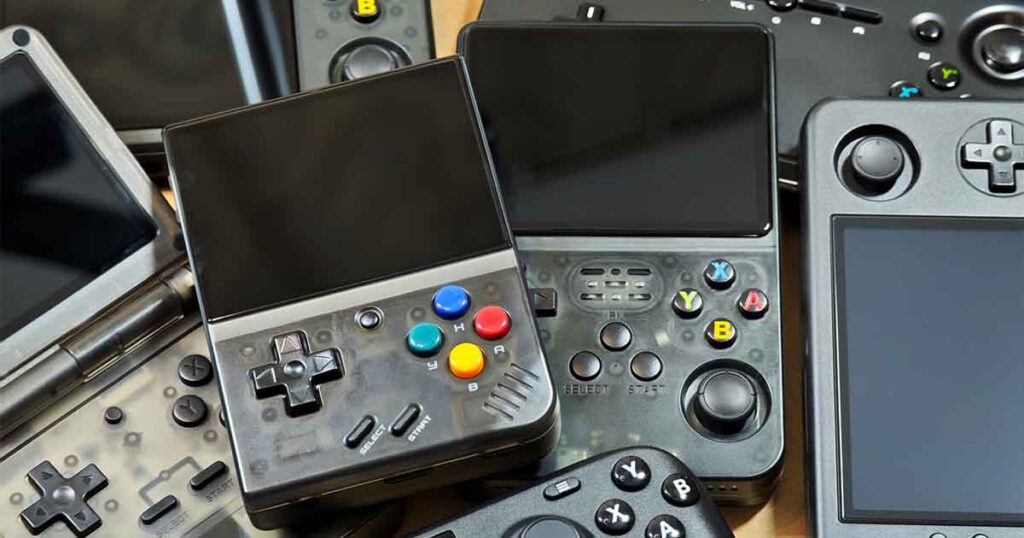
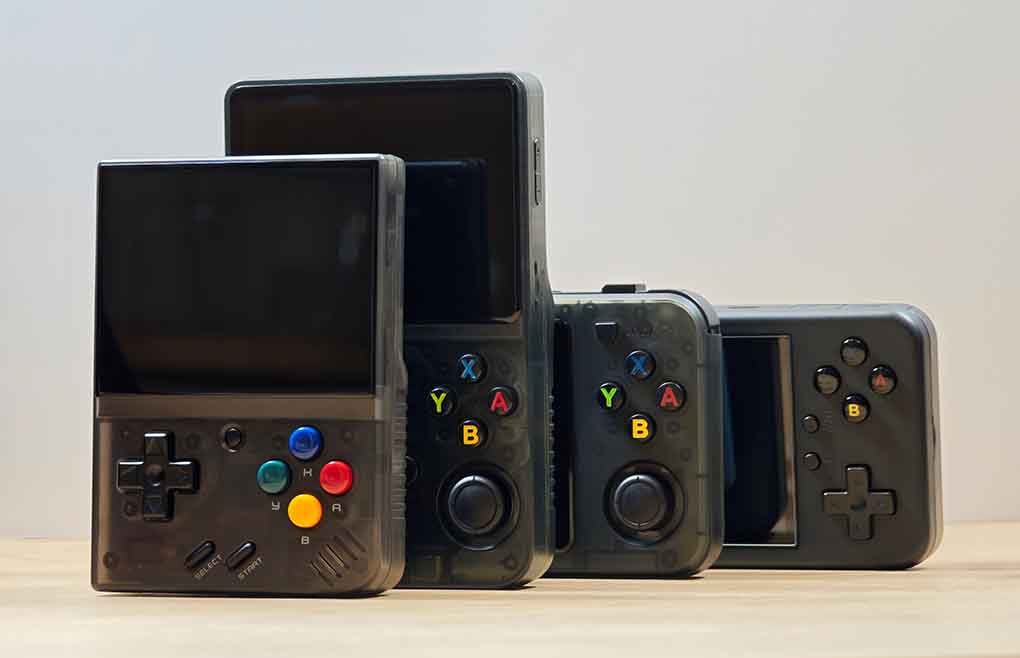
I still think that my favorite “modern retro” handheld by far is the Miyoo Mini Plus. Not only is its build quality substantially better than any other handheld I got in this price range, but for me it’s also twice as convenient to use as some of the slightly more powerful devices like the R36S, which is especially interesting considering it was one of the earliest Rockchip-based retro handhelds to gain explosive popularity on the market in the past.
Pros & Cons of “Retro Handhelds” and Dedicated Emulation Devices
There are several things that I really like about most worthwhile retro emulator handhelds out there. Two of the biggest ones are:
- Giving you a device separate from your phone that is able to handle emulating games from your favorite systems without you having to worry about depleting your smartphone’s battery, receiving or anticipating unwanted notifications, or facing other distractions while gaming.
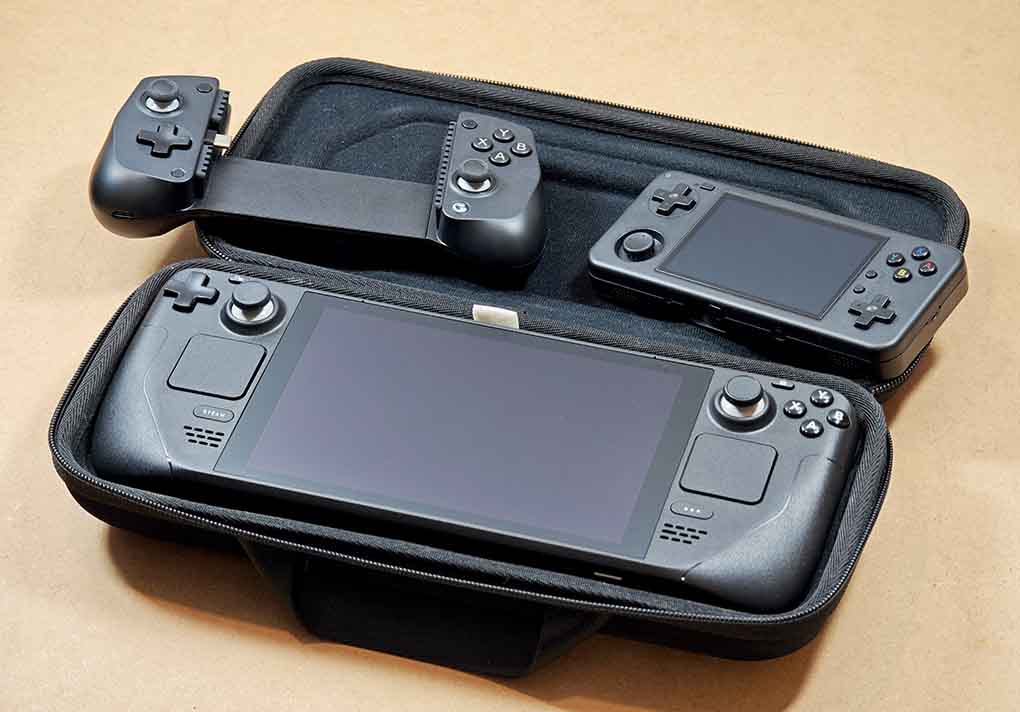
- Giving you access to physical controls, which by default are missing from the world of smartphone retro games emulation, aside from the now very popular telescopic controllers that can be attached to your phone or tablet to make them a more enjoyable gaming device.
Both of these points are reflected in the number of people who include retro handhelds in their everyday carry kits. A similar way of thinking is also one of the reasons for the recent resurgence of digital audio players (DAPs, which we used to call “mp3 players” back in the day). Interestingly, there are surprisingly many people who also use their retro handhelds for on-the-go music playback, instead of their phones (there is a whole subreddit dedicated to them: r/ConsolesAsDAPs).
At the same time, I can really see reasons why purchasing yet another device dedicated to retro game emulation can be counterproductive for many people:
- In most cases, your smartphone and your tablet can emulate most retro systems without any trouble, and moreover, most modern phones are significantly more powerful than the majority of retro handheld emulation devices, giving you a relatively simple entry into the world of emulating many titles that would be impossible to run on budget devices such as the Miyoo Mini Plus or the Powkiddy V90S.
- Paired with the reason laid out above, the existence of the aforementioned telescopic clip-on controllers can make the need for purchasing yet another separate device for emulating retro systems feel redundant.
Modern Mobile Gaming ~and Its Consequences
Touching upon another, but closely related topic, the state of the modern mobile gaming market is, quite frankly, as many of you likely know tragic, or very disappointing to say the least. Many, if not most, modern mobile games (excluding some higher-quality PC ports) feel repetitive and purposeless. I’m really not trying to be nostalgic for the carefree days of my early youth when I say that the times when mobile Java games mass-produced for devices we today call “dumbphones” in my eyes had much more content and soul poured into them than the vast majority of games on the Android/iOS app stores even before the modern era of “AI slop”.
For a customer who wants to spend their precious time on something more than the very much repetitive in nature mobile games relying on aggressive monetization via either some kind of arbitrary and intrusive energy replenishing mechanism or just plain straightforward gambling, the world of “games of the past” can get all the more appealing as the years go by.
When we add to this the overall alluring nature of technology of the previous decades (for people interested in the ins and outs of technology as a whole, or just in the history of video games), it’s a field that can be considered very attractive for many geeks and nerds out there such as me, and probably you reading this right now 🫵.
PC Gaming on Mobile, and The Future to Come
The introduction of advancements in x86-to-ARM translation and emulation systems, as well as software like Winlator, GameHub, and GameNative, has recently brought about a new consideration. Now your mobile devices such as your phone or your tablet can be used to play many titles from your Steam, Epic Games, or GOG libraries, something that not long ago wouldn’t have been viable at all, even on the most capable mobile hardware.
PC game emulation on mobile devices is opening up a whole different world of possibilities for people keen on exploring new ways of gaming on the go, a world that’s very promising considering that our mobile devices only get more powerful as time goes by, and using external game controllers with mobile devices featuring larger displays is slowly rising in popularity.
If you want to learn more about the topic I’m only scratching the surface of here, there are many great resources to browse through, including the established, dedicated websites & YouTube channels that create hands-on content on many new and old handhelds, a few of my favorites being RetroDodo, RetroHandhelds.gg, as well as my humble input into the community, that is the retro gaming & emulation part of Tech Tactician.
With that said, I’m still quite optimistic about the way things are going, both with the open-source software community and with the independent hardware manufacturers going hand-in-hand (with more or less friction) to provide a great emulation experience for both old and new systems, which honestly seems to only get better as the months go by. If not for the recent RAM chip shortages, I’d be twice as excited for the future.
Anyhow, the world of emulation and the world of retro game preservation efforts is something that can be very exciting to get into for those of you who have experienced the past of gaming history yourselves, and those of you like me who are only now discovering the beautiful world of games created within the constraints of the technologies of their own era. If you’re as interested in those topics as I am, as they say, “it’s a good time to be alive”.