
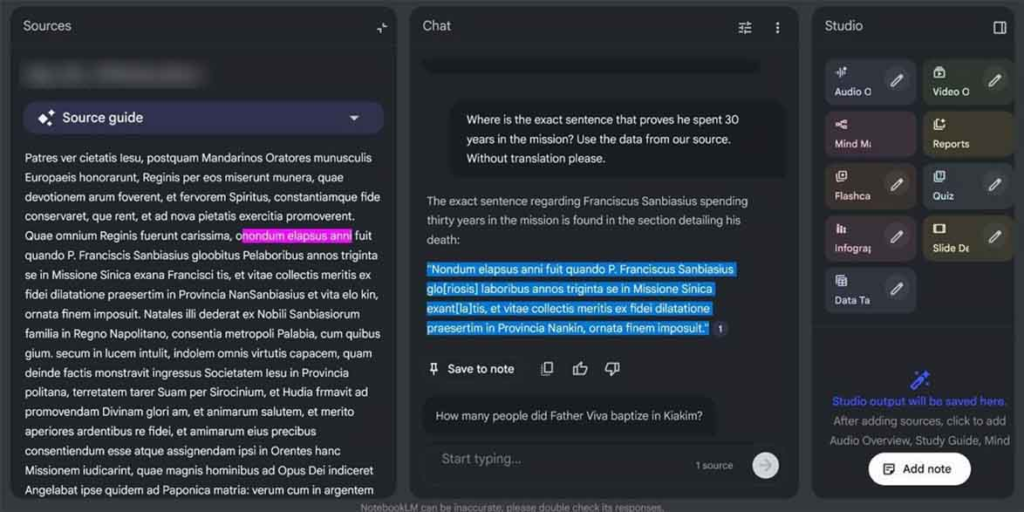
After my not-so-recent talk at the PAS Scientific Centre in Rome focused on utilizing sets of specialized digital tools to aid researchers with transcribing, analyzing, and exploring archival sources, I’ve thought much about the modern field of digital humanities as a whole. With all of its existing definitions, there are still active efforts to better encompass the whole discipline and describe it so that it is sufficiently different from the so-called “traditional” approach to the humanities.
In a field this broad, both in terms of the semantics of its definition and its research practices and methods, dozens of attempts have already been made to define it by identifying the features that distinguish it from the humanities without the “digital”. What practical purpose do these definitions serve? Is another, more appropriate definition even needed in a world where many conscious technology users interface with digital tools on the daily for their great benefit both in the world of science and in day-to-day life?
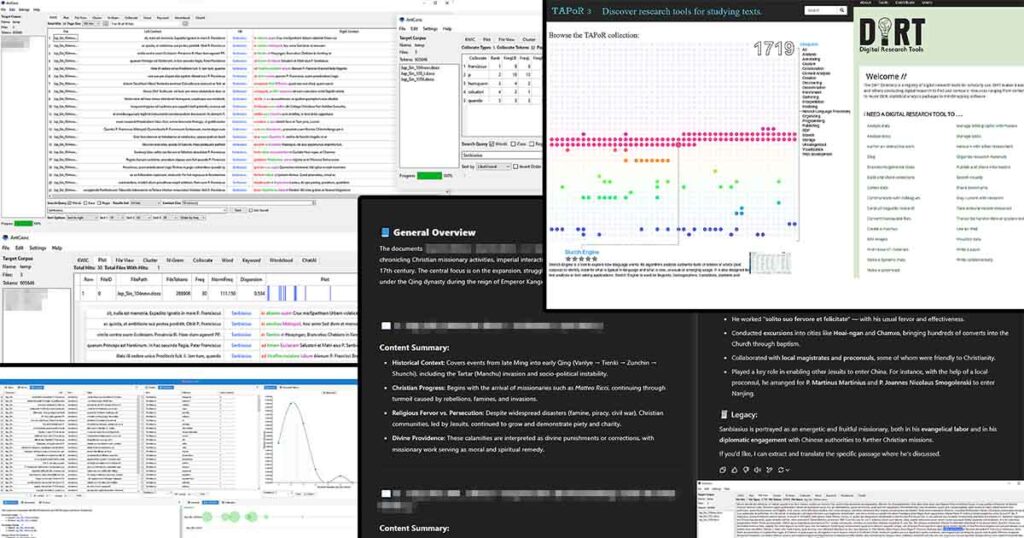
It’s no surprise that much of contemporary scholarly and everyday life is now digitally mediated. For that reason, I am not convinced that yet another abstract definition of digital humanities is always the most urgent task. More interesting to me are the practical problems of digitally assisted humanities research itself: how tools are chosen, how workflows are built, and how the methods used are justified.
I often think about the state of the field while reading, on the one hand, theoretical work on the definition of digital humanities and, on the other, highly specialized discussions of tools designed for very narrow research situations. These are not opposites so much as two ends of the same spectrum. The problem is that the connection between them is still weaker than it should be. We already have taxonomies, tool directories, marketplaces, and tutorial platforms, but they do not yet amount to one widely shared framework that would reliably help researchers move from a research question to a well-justified digital workflow.
All this brings me to some very important questions about digital humanities as a whole:
- Are continued attempts to define digital humanities as a whole still necessary, or do they consume attention that could be directed toward practice?
- Does a meaningful difference between digital humanities and “traditional” humanities research still exist, and if so, where exactly does it lie?
- Are research projects that avoid digital methods despite being able to benefit from them still a common occurrence?
- Assuming that access to a large variety of powerful digital tools that can be useful in various fields of humanities research is relatively simple, why are many researchers still reluctant to use them?
- How should a researcher choose appropriate digital tools at the earliest stage of designing a research project, especially when their knowledge of specialized software is limited?
One of the answers to these questions, at least from my perspective, lies in the word that underpins much of the world-changing research conducted today: methodology.
When we strip it down to its core, methodology can be understood either as a set of methods, rules, or principles used in a discipline, or as the study of methods themselves. This is broadly true. We can understand methodology either as the set of practices through which research advances or as the study of those practices, which enables researchers to work more efficiently and with greater reproducibility.
Every field of scientific inquiry needs to have at least somewhat codified rules of what works in terms of conducting research, and what is deemed inefficient or plainly wrong. Despite my great affinity for Paul Feyerabend’s “anything goes” approach, which brilliantly highlights that breaking rigid rules is often necessary for scientific progress, I would be naive to think we can navigate the daily realities of research without any structured framework at all. In many cases we end up needing some concrete grounding to avoid getting lost.
Digital humanities, which are essentially, in the purest understanding of their name, digitally enhanced humanities research, can, and often do, use methods from many different fields of science, in an interdisciplinary approach to what was once a landscape of thought where even a statistical take on anthropological discourse was a less-than-common occurrence. Because of that, researchers in the field often develop unorthodox and unusual perspectives, tackling the problems they are given using creative mixes of methods borrowed from the fields of both the humanities and “hard” sciences.
This plurality of methods is not, in itself, the problem. On the contrary, the field already has a substantial body of writing on methods, epistemology, and the changing relationship between humanities scholarship and digital technology. The more practical problem lies in the most practical, but often overlooked part of the study: the tools that we use.
Almost everyone knows how to use a computer and browse the internet these days. The vast majority of us know very well how to format text in various word processors, and use basic spreadsheets doing our taxes or tracking our income. Many of us are great at dealing with some specialized part of the digital landscape. Perhaps you, the reader, have extensive knowledge about social media marketing, or are very well versed in the cyber-cultural landscape of a particular social media platform. Then, some of you might, for instance, be able to program in languages like Python, or even force microcontrollers to do your bidding by the use of platforms such as Arduino. A few of you, then, can be specialists when it comes to some very obscure software that the rest of us have never even heard about. Tech knowledge is a spectrum, and all of us are placed somewhere on it.
The obvious point is that no one can know everything, and no one can be an expert when it comes to every piece of hardware or software, however well trained in their own domain of digital landscape they are. Even a highly competent researcher still needs some frame of reference, not only for identifying tools that fit a given task, but also for understanding the assumptions, limits, and consequences built into those tools. In digitally assisted research, selecting a tool and using it responsibly are related problems, but they are not the same problem.
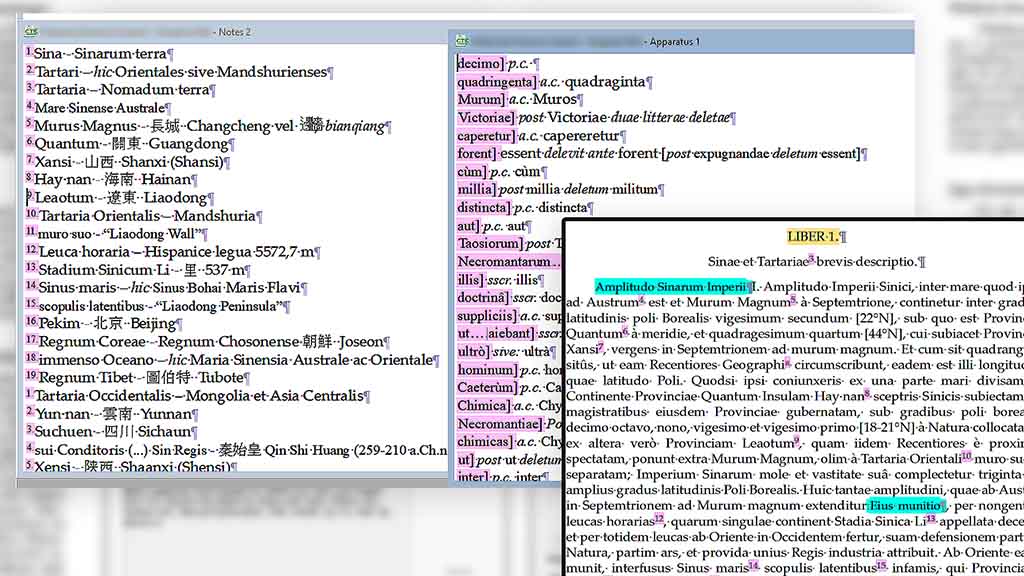
Choosing the right tools for the scientific work to be done, as well as using those tools in a conscious and responsible way are two entirely different topics, each one being equally important, and each coming with many non-obvious pitfalls depending on the technology in question. Even for those of us who are very well trained in a particular discipline of science or are very proficient with different pieces of software often used in the context of digital humanities, many solutions out there will be hard to wrap our heads around at first, thus diminishing our ability to integrate them into our studies, even if they might prove very useful in the long run. Just as many of those solutions can be completely unknown to us, giving us no choice at all to even consider them at any point when planning out our research strategies. This is a problem that is not easily solved by creating (with varying degrees of success) simple online tool lists and repositories, however extensive they might be.
Of course, going back to Feyerabend, someone who trusts their own instincts and is sufficiently stubborn, intelligent, and patient could probably forge their own solutions to most problems known to man (not really, but you get my point). This, however, can be, as I like to put it, sub-optimal and highly tedious. Why not make this whole process faster, more efficient, and much easier, while still leaving it open enough to provide the researcher with genuine “methodological freedom”?
This problem has not gone entirely unnoticed. Over the years, digital humanities communities have developed a number of partial solutions meant to make tool discovery and workflow design less accidental. Taxonomies such as TaDiRAH attempt to describe research activities in a shared vocabulary. Tool gateways such as TAPoR help scholars discover resources relevant to specific kinds of analysis. Platforms such as the SSH Open Marketplace go further by bringing together tools, services, datasets, publications, training materials, and workflows in one discovery environment.
These initiatives are valuable, and they already address part of the problem. At the same time, they do not fully resolve it. Real research workflows are iterative, contingent, and discipline-specific; they rarely unfold as neatly as a catalog entry or a linear workflow diagram would suggest. What still seems to be missing is a compact and transferable framework that would help a researcher move from a concrete scholarly objective to a consciously designed, personalized digital workbench.
This is why I’ve come to think that digital humanities, however broad their definition is, can benefit greatly from a system aiding researchers with designing their personalized digital “workbench” according to their goals in the most efficient way possible, a methodological framework that can be applied to all humanities research, encapsulating and classifying the tools that researchers use by their function and exact role in the process of conducting their study.
I’ve already touched upon this topic in one of my papers*, which lays the groundwork for an evergreen framework based on a threefold multi-label classification of both tools and methods. My “3A” model describes the roles of the distinct types of tools available to modern researchers, as well as the exact ways that they can influence and empower research in the fields of anthropology, history, archival science and cultural studies. Based around three main categories: automation, aggregation and augmentation, and containing a set of rules for creating personalized digital workflows and designing efficient data pipelines in various areas of humanities research, it can act as a useful instrument when planning out research to come, or responsibly enhancing existing workflows that rely mostly on “traditional” methods with newfound digital solutions.
While my proposition is just one way to provide the modern researcher with a reliable frame of reference, it allows them to do more and make the most of their available time and effort. This structured approach can be especially beneficial for individuals unfamiliar with the more advanced digital toolsets available in their particular discipline. Ultimately, the main value of this way of thinking lies in offering a clear methodological orientation without ever closing the door on creative experimentation.
*Original in Polish, translation on the way.